

What is a Learning Intention?
A Learning Intention is a clear statement describing the knowledge, understanding or skill that students are expected to develop during a lesson.
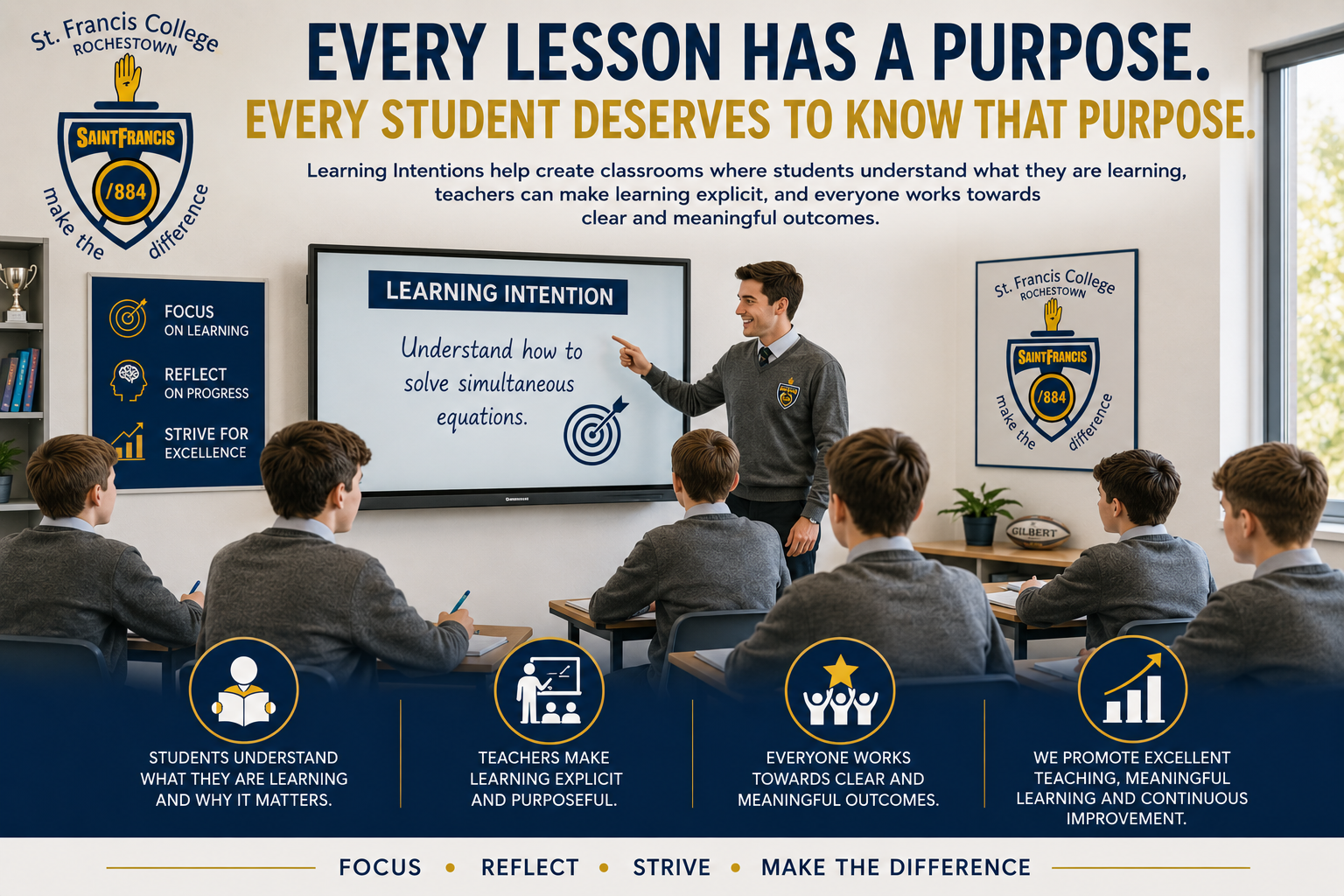
It answers one simple question: "What are we learning today?"
Learning Intentions focus on the learning itself rather than simply the activity being completed.
For example:
❌ Complete questions 1–10.
✅ Understand how to solve simultaneous equations.
Why Learning Intentions Matter
Research consistently shows that students learn more effectively when they know exactly what they are trying to achieve.
Clear Learning Intentions help students to:
understand the purpose of the lesson
focus on the important learning
make connections with previous learning
monitor their own progress
become more independent learners
understand teacher feedback
prepare more effectively for assessments
When students know the destination, they are far more likely to reach it.
Learning Intentions at St. Francis College
Across our classrooms, teachers regularly:
share Learning Intentions at the beginning of lessons
revisit them throughout the lesson
refer back to them during questioning and discussion
use them to guide classroom activities
review them at the end of lessons
Learning Intentions form part of our whole-school commitment to high-quality teaching and learning.
Supporting Junior Cycle
Learning Intentions are central to the philosophy of the Junior Cycle and support many of the key principles promoted by the National Council for Curriculum and Assessment (NCCA).
They help students:
develop key skills
become active participants in learning
reflect on their progress
take increasing ownership of their learning
Learning Intentions also support formative assessment by making learning visible and helping students recognise the progress they are making.
Supporting Senior Cycle
Learning Intentions remain equally important throughout Senior Cycle.
They help students:
understand complex concepts
develop examination skills
connect new learning with prior knowledge
improve the quality of written and practical work
identify areas requiring further improvement
Clear lesson goals enable students to focus on understanding rather than simply covering content.
What Students Can Expect
Students in St. Francis College can expect that many lessons will begin with a Learning Intention.
By the end of the lesson they should be able to answer:
What did I learn today?
Why is this important?
How will this help me in future lessons?
What am I now able to do that I couldn't do before?
Learning is most successful when students understand both the journey and the destination.
For Parents
Parents can support learning by asking simple questions after school such as:
What was today's Learning Intention?
What new skill or knowledge did you gain?
What did you find challenging?
What are you most proud of from today's lesson?
These conversations encourage reflection and reinforce learning beyond the classroom.